
The Epstein Class: Inside the System That Shields the Powerful
Article by Potash
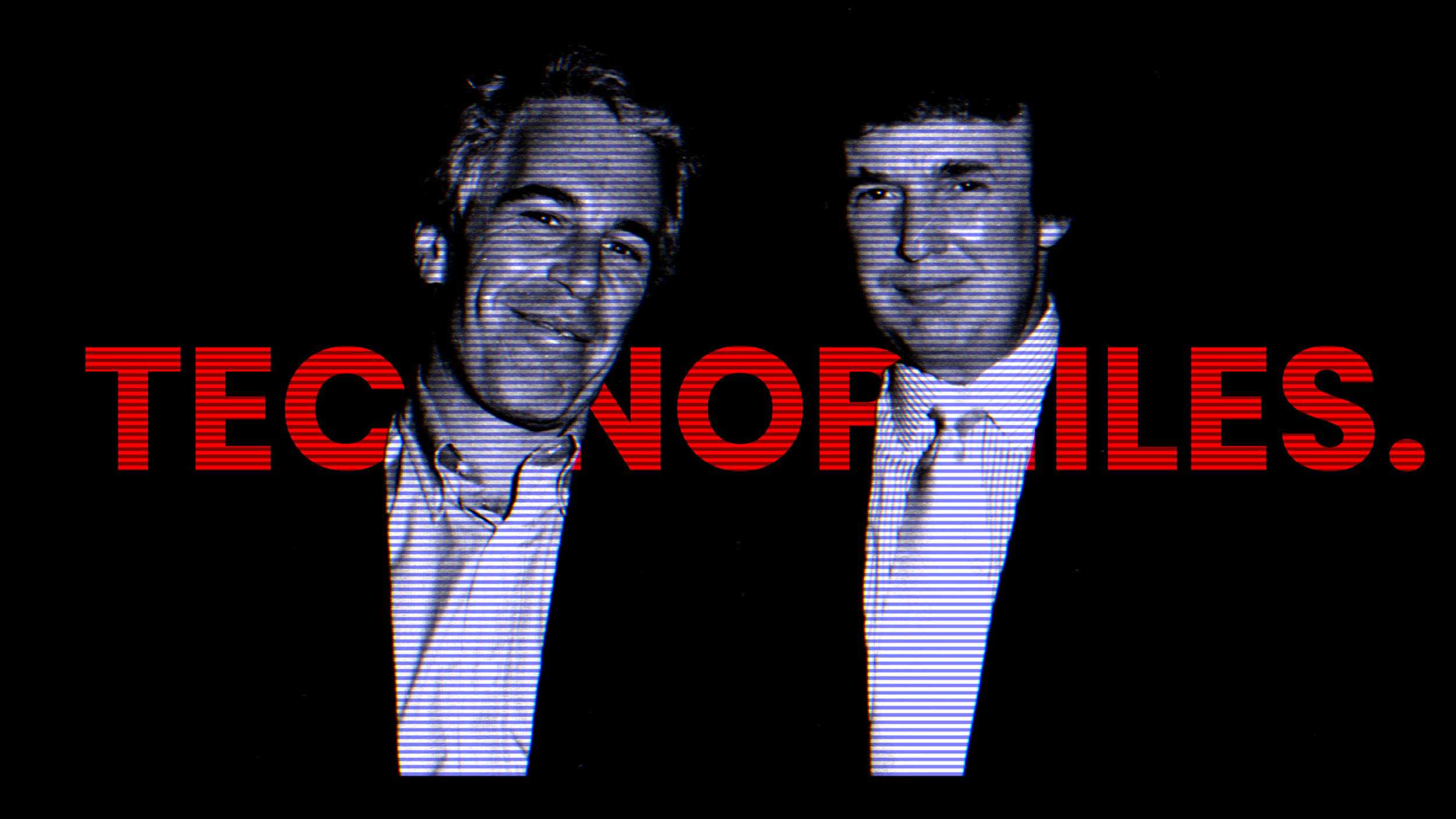
Much has been made about the Epstein Class, the cabal of powerful men abusing young girls while facing no accountability. But are these people just a collection of deranged individuals mad with power, or is there something more to it?
The dark reality of the technological system is that each individual must be completely subordinated to its needs in order for it to function. In practice, this means every individual unfortunate enough to live inside it is subjected to the decisions of powerful organizations over which they hold practically zero influence. These decisions are often life-or-death: they determine if your job becomes obsolete or not, if your water is clean to drink or not, how your children will be educated, and on and on. This feature has nothing to do with malice, corruption, mismanagement or any other societal ill. It is a necessary and inevitable aspect of technological society, required for its very operation. The system is far too complex and interdependent for individuals to control the life and death circumstances of their lives directly. In order for it to function, it must outsource control of the most practical matters to large bureaucratic systems. The system simply has no other option.
When you really internalize what this means—the realization that every important aspect of your life is completely reliant upon people who you have never met and have no influence over—it’s not something you can simply ignore. To reduce each individual to a tiny cog in a vast social machine is fundamentally dehumanizing; humiliating; demoralizing, which is exactly why the system tries so hard to obfuscate this fact. And for a long time, it has succeeded. Few question the act of buying food produced in Malaysia or typing on a computer designed in Taiwan. Most of the time, the outsourcing of control from the individual to large and powerful global organizations is so abstract and built into modern life that most people tend not to think about it.
The main exception to this is the government, which exerts its power in such an obvious and direct way that it is impossible for the average person to ignore the authority it holds over them. Historically, the system has tried to obfuscate even this obvious fact of subjugation through powerful propaganda machinery: by portraying politicians as "public servants" who put the needs of their country above themselves and the like, or else by selecting individuals whose charisma is strong enough to make the public forget about the wool being pulled over their eyes. But as the system's inevitable decline begins to rear its ugly head, these cheap manipulation tactics are quickly losing their effectiveness. Faith in government has declined immensely. Only 17% of Americans trust Washington to do what is right.[1] This is reflected in elections as well. There is an increasing anti-incumbency trend in western nations, where the party in power tends to lose seats solely because it is the party in power. The myth of the "public servant" is not only dead, but to most thinking people a morbid joke. Maybe it’s not yet obvious to most that the system’s politicians are merely puppets in a vast social machinery whose goals and methods have already been predetermined by technological circumstances beyond anyone’s conscious control–play actors that give the comforting illusion of democratic control. But what is abundantly obvious to most now is that many of these puppets are totally corrupt or morally backward. This was easily anticipated by any basic student of history: when an empire becomes unassailable, its ruling class is freed from necessity, and it is this necessity–not education in virtue, that kept them honest. In that vacuum, decadence is not an anomaly but the default. Modern industrial society accelerates this dynamic to an unprecedented degree. Its vast wealth and systemic insulation buffer its elites to such an extent that decadence and corruption occur on a scale previously unimaginable.
That’s why people are so furious over the Epstein class. They aren't angry merely because pedophiles exist, they're angry because the people who rule over them are violating the most serious of rules without consequence, while punishing them for violating the most minor, and that they are powerless to do anything about it. With the partial release of the Epstein files, their degeneracy is (at least somewhat) out in the open, and yet nothing is being done about it. There are no investigations, no justice for the victims or punishment for the abusers. In fact, the exact opposite is happening, the entire government has spent decades doing everything it can to protect the perpetrators involved.
An uncomfortable reality which many do not want to accept, is that the reasons the system has for letting these vile crimes go unpunished actually goes deeper than just protecting a few pedophiles. Solely for the sake of its own proliferation, the system is highly incentivized to let the perpetrators go. It is certainly true that a central reason these individuals have not been punished is that they hold serious power and influence over the judicial sector, and thus are capable of avoiding accountability. But even if these individuals had no direct sway over the justice system, the system would still likely be inclined to cover it up. If several of the most powerful men in America were revealed to have engaged in heinous sex crimes, then confidence in the system would be severely degraded, there would be chaos in the corporate world, and the system’s reputation would have been seriously strained. Things would function much more smoothly if these crimes were to be covered up, and thus that is what the system did.
Or at least that is what it tried to do. Clearly things have not gone according to plan, and thus the mass outrage over this subject. One could object that the cat is out of the bag, and the system has already lost much trust in the public's eyes over this subject, so at this point it would be in the system’s best interests to punish the individuals involved, purely from a PR perspective. The problem is that adequate punishment would be an admission of major crimes at a high level that the system covered up for decades, which would seriously damage the system's reputation for a long time to come. Something like that would not be so easily forgotten. Whereas now, even though the system is guilty in the eyes of most people, the issue is much more easily pushed under the rug. Our cultural zeitgeist is constantly moving from one thing to the next, always forgetting yesterday's disasters for today’s headlines.
Of course, the point I’m making isn’t that we should excuse any of the heinous acts committed to boost the GDP, it’s that the technological system is so fundamentally corrupt that it both enables these crimes, and is incentivized to protect the perpetrators for its own propagation. The problem with the Epstein Class goes deeper than a handful of pedophiles engaging in disgusting sex acts, it’s a harrowing reminder of how powerless the individual is under technological society, and how utterly unaccountable those who hold power are (when their actions do not disrupt the functioning of the system). The solution to this crisis is not just to bring justice to those who have engaged in these crimes, but to destroy the technological system which is responsible for the crisis in the first place.
READ NEXT


NOTES:
[1] https://www.pewresearch.org/politics/2025/12/04/public-trust-in-government-1958-2025/
Article by Potash