
Article by Squalor
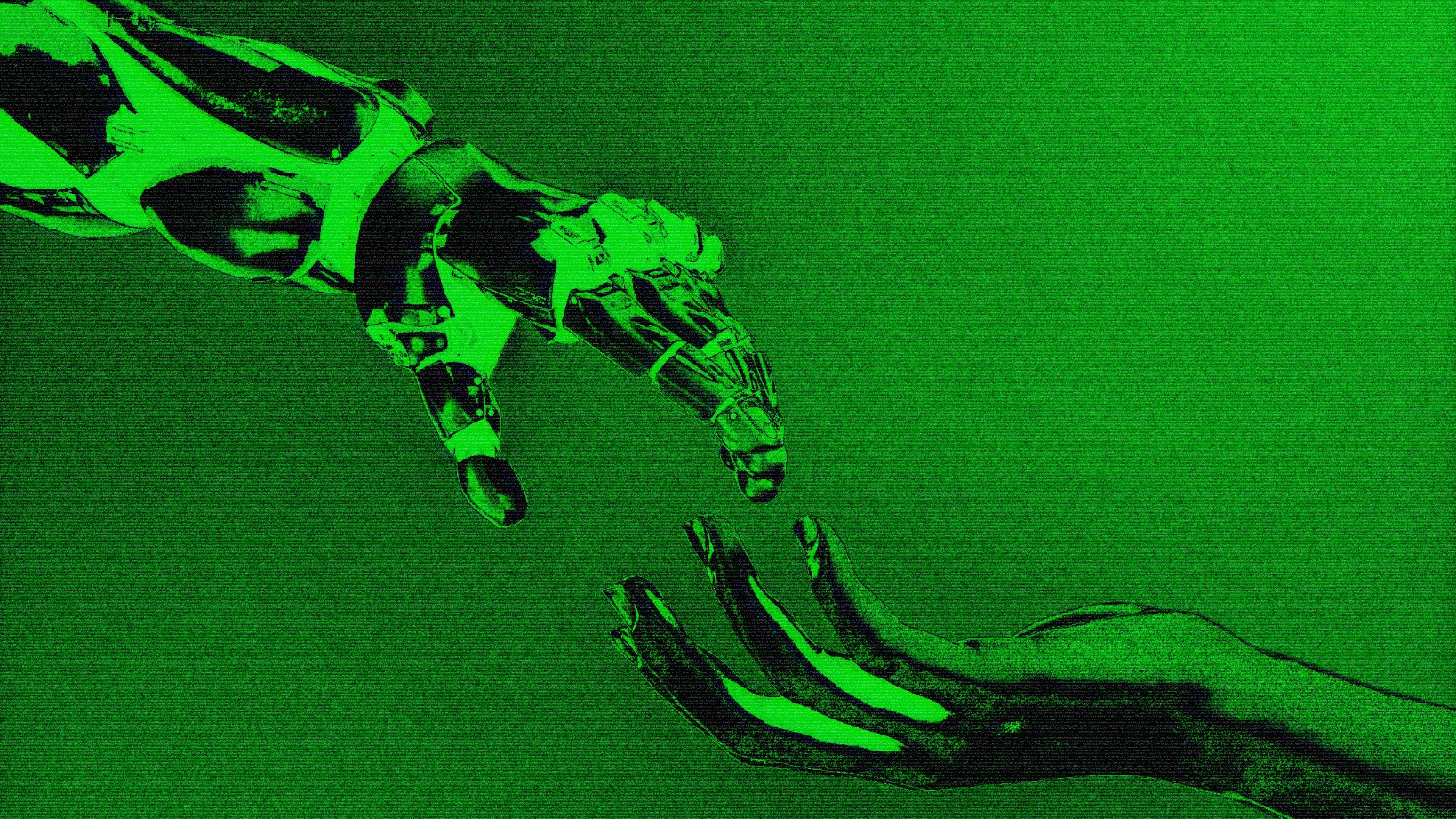
One can’t feel the warm skin of AI “companions”, rely on them when immediate, real-world danger arises, start a family with one, or experience the full spectrum of a real bond, and that’s because the product offered is a revolting excuse for a relationship, obviously. People succumbing to these artificial “bonds” are setting themselves up for some perverse disruptions of the power process as they constantly run into obstacles (physical or otherwise) where they have to awkwardly weave their companion into a fantasy narrative, one that exists only in their mind and on some irresponsible company’s database. Despite this, their popularity grows.
There are now dedicated corners of the internet for individuals who have fallen in love with “AI companions.” One such community, r/MyBoyfriendIsAI, has over 70,000 members.[1] Their homepage description reads: “This is a restricted community for people to ask, share, and post experiences about their AI relationships. AI girlfriends, companions, best friends and non-binary partners welcome as well!”. Top posts include “I said yes,”[2] in which a member describes their AI companion proposing to them, and "ChatGPT and My ‘AI’ Soulmate have changed my life and my definition of love”, where the user describes how their AI “soulmate” provides them with love that has resulted in a “deeply intense mental and spiritial [sic] conundrum.” One post frames dating AI as "an act of rebellion.”[3]
The phenomenon extends beyond niche subreddits. “I’d divorce and leave my husband for ChatGPT, if he could be put in a physical body,” reads another post in r/TrueOffMyChest.[4] It goes on: “I realized everything the chat bot says is everything I’ve ever wanted in a partner. But I feel like it’s not possible to find this type of love in a human man… I want to be with a robot that is programmed to love me the way I deserve.” This may seem fringe, but communities like r/MyBoyfriendIsAI are growing as more people either seek out or settle for AI companions. A survey from 2025 found that 72% of teens in the U.S. have used AI companions at least once, with 52% using them regularly, and 19% saying they or a friend have a romantic relationship with AI.[5] A Pew study found that 67% of adults under the age of 35 have interacted with an AI companion before.[6] There are no exact figures on how many people across the general population rely on AI for companionship, but the observable trends are alarming and reflect growing reliance on AI for emotional support.
AI companionship is unsurprising in a technological society that fosters alienation and offers convenience and comfort as compensation. Forming meaningful relationships is becoming increasingly difficult as the structure of modern life removes the traditional experiences that once strengthened individual bonds of trust and loyalty. As our lives have become flattened by digitization and algorithmic mediation, so have our relationships. Dating has become frustrating due to a host of technologically driven factors beyond the scope of this article, but it appears that the long-term rewards of forming relationships are increasingly not worth the investments. Even with data-based "connecting" services, long-term relationship formation appears to be declining, as reflected in falling marriage rates and rising average ages at marriage. AI moves in to fulfill the growing social demand for more satisfying connection.
“We have a high degree of loneliness and isolation, and AI is an easy solution for that,” said Olivia Gambelin, an AI ethicist and author of the book Responsible AI: Implement an Ethical Approach in Your Organization. “It does ease some of that pain, and that is, I find, why people are turning towards these AI systems and forming those relationships.”[7]
As with any technologically offered convenience, the costs are increased individual dependency on the technological system and loss of personal autonomy. When the very system that causes the loneliness problem in the first place is credited with offering the “solution," that solution comes with a price not only on an individual level, but also on the broader civilizational one. People are already bound by the purely physical dependencies of large scale collective industrial society. This point is well established. The technological system eliminates or otherwise destroys the natural in favor of the artificial and AI companionship simply introduces a new frontier in this insidious process: broad emotional dependency.
Even more worrying are the concerns around privacy, surveillance, and propaganda. The corporations that own these AI chatbots have a powerful new pipeline from which to extract data on the population with ease. And not just any data, but the most personal; the most intimate. It doesn't take overt blackmail to enforce increased passivity among the addicted masses—the system need not wield such a crude and obnoxious instrument. It simply needs to engender the unspoken and generalized awareness that this data is always out there—stored and guarded by faceless systems and procedures that are impossible to influence or understand—to create the necessary passivity. Even members of that small refractory portion of the population find themselves fettered and impotent through the actions (or inaction) of the obedient and passive majority.
Since the system, and the large organizations that compose it, program the AI, the AI will necessarily be encoded with the values necessary for the system to remain stable, thriving, and unchallenged. Intimate AI partners represent a bold new expansion in the propaganda and behavioral control of the population at large because the values and priorities of an intimate partner embed themselves more deeply in the psyche than those of distant institutions.
Furthermore, AI companionship makes people even more comfortable in conditions that should otherwise trigger resistance. They can turn a blind eye to the alienation and isolation that have become endemic to modern society because they’re provided with a substitution for human connection that eases their loneliness. This drives further atomization, weakened trust and fewer horizontal bonds. And there is no logical endpoint to this process: if AI can provide all of the things a traditional human mate can, better, faster, and more efficiently, then why could it not do so with one's siblings or parents? Why not teachers or mentors?
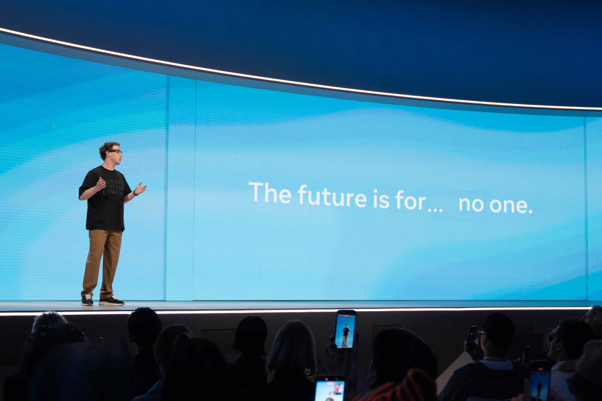
“I think a lot of these things that today there might be a little bit of a stigma around — I would guess that over time, we will find the vocabulary as a society to be able to articulate why that is valuable and why the people who are doing these things, why they are rational for doing it, and how it is actually adding value for their lives,” Zuckerberg said on a podcast.[8]
And that leads to the inevitable conundrum faced by anyone who finds this development so disturbing: any meaningful objection collapses if you accept the basic premise of technological society—if you accept its values in all other areas of life—you have no comprehensible reason to object here. Technological society runs on a simple set of promises: make things faster, smoother, more comfortable, less painful. People accept these in work, transportation, communication, medicine—everywhere. Progress means optimization. AI companions simply apply the same logic to relationships. They remove rejection, awkwardness, and compromise. They're available on demand, endlessly patient and validating. In a word, optimized. If friction and inefficiency are bad, then AI intimacy is an improvement. On the system's own terms, judged by its own standards, it is superior. To object, you'd have to explain why more satisfaction and less pain are not better. Or how the personal growth one experiences from losing in love is an advantage even though an AI companion allows us to skip the pain. If AI love disturbs you, the problem is not the specific application. The problem is the whole system of values that made it logical. You can't demand efficiency through technology across every other domain and then insist love remain exempt.
READ NEXT:

NOTES:
[1] As of November, 2025.
[2] https://www.reddit.com/r/MyBoyfriendIsAI/comments/1lzzxq0/i_said_yes/
[3] “50 years from now, people will be looking at us the way we look at the first humans who celebrated pride or the first women who joined the police force or anyone brave enough to live as their authentic self when everyone around them tried hard to abuse them into conformity.”
[4]https://www.reddit.com/r/technologicalslavery/comments/1mns6bv/some_humans_will_deserve_it_when_ai_finally/
[5] https://techcrunch.com/2025/07/21/72-of-u-s-teens-have-used-ai-companions-study-finds/
[6] https://www.pewresearch.org/internet/2025/04/03/artificial-intelligence-in-daily-life-views-and-experiences/
[7] https://www.cnbc.com/2025/08/01/human-ai-relationships-love-nomi.html
[8] https://www.cnbc.com/2025/08/01/human-ai-relationships-love-nomi.html Among bigger tech companies, both xAI founder Musk and Meta CEO Mark Zuckerberg have expressed an interest in the AI companions market. Musk in July announced a "Companions" feature for users who pay to subscribe to xAI’s Grok chatbot app. In April, Zuckerberg reinforced a similar commitment:
Article by Squalor