
Commentary by The Heron
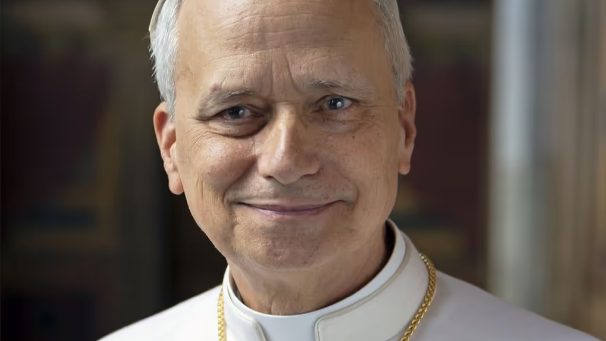
Pope Leo XIV’s first encyclical has caused quite a stir in the media owing to its elaborate swipe at artificial intelligence. Magnifica Humanitas, as it is titled, primarily focuses on the increasingly pervasive and perilous technology. Besides echoing well-known dangers associated with its development such as environmental degradation, manipulation of information, and violations of privacy,[1] Leo also lays out his views on what ought to be done to ameliorate or eliminate these negative effects. Decrying AI’s control by the few, he stresses the need that it be democratised.[2] Moreover, AI must be “disarmed” (that is, freed from the relentless economic, military, and cognitive competition involving it), thus “preventing it from dominating humanity.”[3] Interestingly, Leo also explicitly condemns attempts to use AI and related technologies for transhuman endeavours, summarising his opposition by stating that “humanity – in all its grandeur and woundedness – must never be replaced or surpassed.”[4] This is particularly remarkable as it is highly unusual that a public figure of his holiness’ stature explicitly rejects transhumanism. All in all, the encyclical was not a pleasant lullaby for the likes of Sam Altman and Mark Zuckerberg.
This is not the first time Leo has expressed anti-AI sentiments. In fact, these have been a defining feature of his tenure. For example, he was once asked whether he would give permission to create an "artificial pope”, which he promptly refused to do.[5] One may find this persistent scepticism regarding AI and many other nascent, impactful technologies surprising, but even a perfunctory glance at the contents of the Bible helps explain it. Consider the well-known Garden of Eden, for instance. An earthly paradise ornate with sinuous rivers and “every tree that is pleasant to the sight and good for food”, the Bible uses it to describe the bliss humanity lost following Adam’s defiance of God’s command.[6] Eden, and by extension nature, becomes a symbol of the perfection of divine creation in contrast to the flawed products of human ambition. Modern technologies such as AI and biotechnology stand in sharp opposition to nature and the divinely created. Not only do they destroy nature at a shocking and unprecedented scale and pace, they also assist people in attempting contemptible hubris – “playing God.”
Nevertheless, it is important to not overstate Leo’s position. Although he obviously dislikes AI, his suggested measures to tackle the problem are decidedly of a reformist nature. The Pope essentially accepts the existence of AI and other modern technologies, stating that “[w]e can embrace the technological progress that alleviates suffering and unlocks new possibilities, provided that we do not abandon the very essence of our humanity, namely the capacity for relationship and love.”[7] This acquiescence permeates his “solutions,” such as his proposition for a democratised AI. Unfortunately, history repeatedly shows that reformist measures stand no chance in taming, let alone eliminating, the immense technological beast threatening both humanity and nature. As Theodore Kaczynski explains throughout his oeuvre, the only solution to this unprecedented problem is revolution – that is, the complete dismantlement of the Industrial System. Unless this is achieved, the Industrial System will continue with its established historical pattern of relentlessly seeking efficiency, thereby most likely paving the way for humanity to become useless and thus either discarded altogether in favour of AI or reduced to an even more domesticated condition than today.
Still, it is welcome that the head of the Catholic Church is particularly vocal about the AI problem. Although he, as a man in charge of an exceedingly conservative organisation, may not be able or willing to advocate for radical solutions, his numerous followers may be more open to carrying that torch. Besides Leo’s encyclical, what may further push them towards such a path is that traditional religion itself is increasingly at odds with the needs of the System, as reflected by its decline the past two hundred years. In other words, by opposing the Industrial System, one is also curiously helping prevent the impact of the divine word from waning.
Read Next


___________
NOTES:
[1] Leo XIV, Magnifica Humanitas, Encyclical Letter on Safeguarding the Human Person in the Time of Artificial Intelligence (15 May 2026), §§101-102, Vatican website, Encyclical Letter of His Holiness Leo XIV Magnifica Humanitas (15 May 2026)
[2] Ibid., among others, §67 and §101
[3] Ibid., §110
[4] Ibid., §§115-126
[5] Elena Giordano, ‘Pope Leo rejects plans for an AI pope’, Politico (8 April 2026), available at: Leo rejects plan for AI pope – POLITICO
[6] ‘Genesis 2’, Holy Bible: New International Version (Bible.com, 2011), available at:
Genesis 2 | NIV Bible | YouVersion
[7] Leo XIV, Magnifica Humanitas, Encyclical Letter on Safeguarding the Human Person in the Time of Artificial Intelligence (15 May 2026), §126, Vatican website, Encyclical Letter of His Holiness Leo XIV Magnifica Humanitas (15 May 2026)
Copyright © 2026 by Wilderness Front LLC. All Rights Reserved.
Article by Свѣт