
Commentary by Atrox
Original article: https://www.cnbc.com/amp/2026/02/23/openai-altman-defends-ai-resource-usage-water-concerns-fake-humans-use-energy-summit.html
As the AI industry grows and its pioneers continue to draw public attention, it becomes increasingly apparent that they value technical progress for its own sake above humans. And why wouldn’t they? They are toiling to create, train, and ultimately unleash what amounts to a synthetic "god". If that’s the task at hand, then how can they be bothered with the well-being of those flawed and inefficient “meatbags” called Homosapiens? Or any other living organism for that matter? To the technophiles these are only obstacles—technical inefficiencies—to be dismissed when they become an inconvenience.
“But it also takes a lot of energy to train a human,” he said “it takes like 20 years of life, and all the food you eat before that time, before you get smart.”
This is how Sam Altman addressed concerns over data centers’ resource consumption at the AI impact Summit in New Delhi on 2/19/2026. In this framing, human life itself becomes just another training expense—comparable to the energy required to run machines. Its value is not inherent, but conditional. It is valuable only to the extent that it contributes to "progress." Humans become another cost focus in a broader system of production, while technological efficiency emerges as the dominant standard by which all things are judged. What matters is no longer dignity, freedom, or intrinsic worth—and how technology impacts these—but optimization and output: how effectively humans serve the system.
Technophiles like Sam Altman will of course deny that they devalue human freedom, dignity, or intrinsic worth. They will insist that these remain central. But this is a contradiction that cannot hold. One cannot simultaneously elevate technological progress as the paramount good while preserving human beings as ends in themselves. The former inevitably demands the subordination of the latter. Both can be affirmed in rhetoric, but when push comes to shove, when action really matters, efficiency scale and output are the priorities.
The fair comparison is if you ask ChatGPT a question, how much energy does it take once a model is trained to answer that question, versus a human, and probably AI has already caught up on an energy efficiency basis, measured that way.
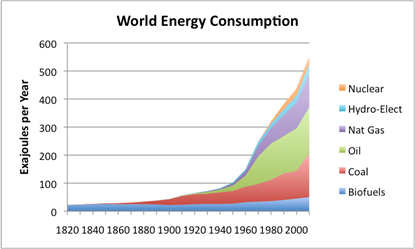
In light of the foregoing, this argument collapses even before its premises are examined. But even if one were to grant this framework—measuring human and machine intelligence purely in terms of energy efficiency—the comparison still fails under scrutiny. To measure AI’s energy efficiency “that way” requires treating technological systems as if they were static. In other words, once an AI model is trained, no further training of that model or any additional models will ever occur, and the vast amount of energy that was expended to train the original and every iterative model isn’t considered. [1] This is not how any technology in history has functioned—nor how it could ever function according to any realistic understanding. Every technological system expands and compounds its resource demands over time. A contrary view can only be maintained through ignorance, self-deception, or deliberate omission. In the case of Sam Altman and his peers, it is difficult to see it as anything but the latter two.
Although Altman is quick to dismiss concerns over AI’s resource consumption, he advocates for a “move towards nuclear or wind and solar very quickly” “because the world is using so much AI.” Without insulting the reader’s intelligence by explaining this obvious contradiction, this sheds light on an innate quality of the industrial technological system: an insatiable hunger for energy from any possible source.
There are well founded concerns over the environmental impact that wind and solar power may have in store for the future, and no long-term sustainable solution has been proposed for the disposal of exhausted nuclear fuel. “Clean” energy is a euphemism for more energy. Why didn’t Altman delay the release of AI until the clean energy situation was solved? Because to halt OpenAI’s projects out of a sense of caution or responsibility would mean handing his share of the industry over to the next unscrupulous developer. This is a prime example of how technology hijacks human nature to autonomously develop under pressure of natural selection on a global stage.
This phenomenon is precisely why the system will leave the earth a dead planet if left unchallenged. Complete collapse of the system, as painful as it may be, is the only option to prevent the biosphere from being consumed by the technological beast. Failing this, our technological “progress” will become our annihilation.
___________
NOTES:
[1] Tverberg, G. (2012, March 13). World Energy Consumption Since 1820 in Charts. Our Finite World. https://ourfiniteworld.com/2012/03/12/world-energy-consumption-since-1820-in-charts/?amp
Copyright © 2026 by Wilderness Front LLC. All Rights Reserved.
Read Next

Newswire by qpooqpoo